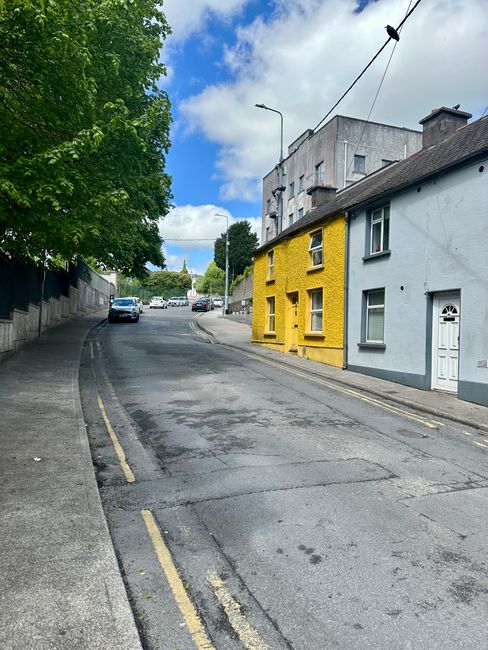
Moving Out of Longford Town Centre? Streets to Know
If you are moving out of Longford Town Centre, the street you live on matters more than most people expect. Narrow access, busier corners, parking restrictions, one-way routes, and the simple reality of trying to get a van close enough without causing hassle can all change how smoothly move day goes. In Longford, the difference between an easy lift and a frustrating delay can be just a few streets. That is why knowing the key streets around Longford town centre is so useful before the boxes are even taped shut.
This guide walks you through the practical side of moving from the town centre: which streets tend to be trickier, what to think about when planning loading and parking, how to avoid common mistakes, and how to keep your move calm and organised. Truth be told, a good move is rarely about luck. It is usually about preparation.
Whether you are hiring help, arranging a van yourself, or comparing removal options, this article will help you make sensible decisions with fewer surprises on the day.
Why Moving Out of Longford Town Centre? Streets to Know Matters
Longford town centre is not the kind of place where you can always assume a van will pull up outside the door and everyone will stroll out in a neat line. Some streets are tighter, some have heavier foot traffic, and some are simply awkward at certain times of day. If you know the layout in advance, you can plan around the realities instead of discovering them at the worst moment.
For people moving home, the stakes are usually practical: time, cost, and stress. If a removal van has to park further away than expected, the loading process takes longer. If the street is busy with traffic or shoppers, carrying furniture gets slower and riskier. And if the route out of town is not planned properly, you may end up with avoidable delays before you have even left the area. Little things, yes. But little things add up fast.
The phrase "streets to know" is really about awareness. It means understanding which routes are likely to be straightforward, which ones may need extra care, and where a bit of advance planning can save you a lot of hassle. If you have ever tried moving a mattress in light rain while dodging parked cars and apologising to passers-by, you will know exactly why this matters.
Expert summary: The smoother the vehicle access, the smoother the move. For a town-centre departure, the best results usually come from checking parking, timing, and route access before moving day, not during it.
There is also a financial angle. A move that runs late can sometimes mean paying for extra time, extra labour, or a second trip. That is not ideal. A bit of street-level planning helps protect your budget as well as your nerves.
How Moving Out of Longford Town Centre? Streets to Know Works
At a practical level, this type of move works by breaking the job into access, loading, and travel. Each part sounds simple until the street is busy, the lift is small, or the van cannot stop where you hoped. Then it becomes a logistics problem rather than a packing job.
The first step is identifying your exact address and the streets around it. In a town-centre setting, the closest road is not always the easiest road. A side street may offer better loading access. A nearby wider road may be less convenient for carrying items, but much easier for the van to stop safely. The point is to compare options rather than assume the front door is the only answer.
Next comes timing. Early mornings are often calmer than later periods, though that depends on local patterns and your own moving date. If the street is close to shops, offices, schools, or other busy spots, the difference between 8:00 and 11:00 can be huge. A move that begins quietly can suddenly feel chaotic once traffic picks up. It happens all the time.
Then there is the matter of transport. Depending on how much you are moving, you may need a van of a certain size, a vehicle that is easy to park, or a removal team that can manage longer carries from a nearby loading point. A smaller vehicle can sometimes be easier on tight streets, while a larger one may reduce the number of trips. There is no perfect answer for everyone. Just the right fit for your street and your belongings.
If you are comparing help, services such as man and van, removals, or more structured home moves can suit different move sizes and levels of assistance. The best choice is usually the one that matches access, volume, and time pressure rather than the one with the flashiest name.
Key Benefits and Practical Advantages
Knowing the streets around Longford town centre before you move does more than make you feel organised. It gives you real advantages that show up on the day.
- Faster loading: If you know where a van can stop, furniture comes out quicker and with less back-and-forth.
- Lower stress: You are not making last-minute decisions with a sofa halfway down the stairwell.
- Less disruption: Good planning reduces the chance of blocking traffic or inconveniencing neighbours.
- Better budgeting: Fewer delays often mean fewer extra costs.
- Safer handling: Shorter, better-planned carrying routes reduce the chance of bumps, slips, and strained backs.
There is a quieter benefit too: confidence. Once you understand the street layout and your access options, the move stops feeling like a mystery. You can picture the sequence of events in your head, which makes packing decisions easier. For example, you will know whether to disassemble a bed in advance, whether to move the car the night before, or whether to keep the smaller boxes separate for easier carrying. Simple, but powerful.
And let's face it, moving is already one of those life jobs that eats up your attention. The more you can remove guesswork, the better.
Who This Is For and When It Makes Sense
This guide is useful for a few different types of movers. You might be leaving a flat above a shop, a terraced property close to the centre, or a rental home with limited front access. You might be a landlord helping a tenant move out, or a family coordinating a bigger household relocation from a busy central street.
It makes particular sense if any of the following apply:
- You live on a street where parking is limited or tightly controlled.
- Your furniture is bulky, heavy, or awkward to carry through narrow access.
- You are moving at a busy time of day or near a busy trading area.
- You want to avoid paying for wasted time caused by poor access planning.
- You are using a smaller vehicle and need to think carefully about loading strategy.
If you are a business owner moving stock, fixtures, or office equipment, the same principles apply. For a commercial move, the route and street access can matter just as much as the packing list. In those cases, it may be worth looking at commercial moves or office removals if your premises need a more structured approach.
Some moves are also time-sensitive. End-of-tenancy deadlines, completion days, and handover appointments do not leave much room for trial and error. If that sounds familiar, then planning the streets and access points is not optional. It is one of the most important parts of the job.
Step-by-Step Guidance
Here is a practical way to approach moving out of Longford town centre without turning it into a last-minute scramble.
- Map the exact property access. Check whether the front door is the best loading point or whether a nearby street works better. Look at door width, stair access, and whether large items will need to be carried through shared areas.
- Walk the surrounding streets. Do not rely on memory alone. A ten-minute walk can reveal one-way routes, tighter corners, or better stopping points that you might otherwise miss.
- Think about timing. Ask yourself when the area is likely to be busiest. Mid-morning in a town centre can be very different from early morning. If you can choose your slot, choose sensibly.
- Decide what needs disassembly. Beds, tables, and larger shelving often move better once taken apart. This is especially true if the carrying route includes stairs or awkward turns.
- Prepare a loading order. Put heavier items and boxes close together so they are ready to go first. Keep essentials separate so they do not disappear into the van at the wrong moment.
- Match the vehicle to the street. If parking is tight, a more manoeuvrable van may be easier than a larger one. If you have a lot to move, a bigger vehicle may still be worth it. Balance both factors.
- Protect your access route. Clear hallways, remove trip hazards, and keep keys, documents, and valuables to one side.
- Allow a margin for delays. Traffic, loading issues, and weather can all slow things down. Build in time. Always.
A small but useful habit: take a few photos of the street, the parking position, and the entrance before moving day. It helps you brief anyone assisting, and it can also jog your memory if plans change. Not glamorous, but very handy.
Expert Tips for Better Results
In our experience, the moves that go best are the ones where the person in charge has already imagined the awkward bits. Here are a few things seasoned movers tend to think about early.
- Use the easiest carry route, not the shortest one. A few extra metres on a wide pavement can be better than squeezing through a narrow pinch point.
- Keep one person focused on the street. Someone should always be thinking about traffic, parking, and whether the van is still in the best position.
- Label boxes by room and priority. "Kitchen - first night" is better than a vague label that nobody remembers by afternoon.
- Pack an essentials bag. Chargers, medication, documents, toiletries, and a change of clothes should not be buried under cushions and frying pans.
- Check weather before you start. A damp pavement and cardboard boxes are not a brilliant combination. Common sense, really.
One more thing: if the move feels complicated, simplify the plan instead of complicating the packing. People often assume more boxes means better organisation. Sometimes it does. Sometimes it just means more boxes. There is a difference.
If you are unsure which moving support level you need, pages such as removal services, movers, and packing and unpacking services can help you compare options by the kind of support you actually need, not just by price alone.
Common Mistakes to Avoid
Most moving problems are not dramatic. They are small oversights that become annoying once the day begins.
- Assuming access will be fine: The biggest mistake is to assume the street will work itself out. It rarely does.
- Leaving parking too late: In town-centre settings, parking is often the issue that slows everything down first.
- Forgetting about stairwells and tight turns: A sofa can look manageable until you reach a corner.
- Overpacking boxes: Heavy boxes are harder to carry and more likely to split. Nobody wants that little disaster at the doorway.
- Not protecting fragile items: A bumpy carry over uneven paving can be enough to crack poorly packed items.
- Ignoring access for the return trip: If you need to come back for cleaning, keys, or a final sweep, make sure that plan is accounted for too.
Another common one: people focus on the house and forget the destination. If you are moving into a place with narrow access as well, the problems may simply continue at the other end. It sounds obvious when written out, but in a real move people often forget to check both sides of the journey.
Tools, Resources and Recommendations
You do not need fancy equipment to make a town-centre move go well, but a few practical tools can make the day far easier.
- Sturdy moving boxes: Consistent box sizes stack better and are easier to carry through compact access.
- Bubble wrap or packing paper: Helpful for glasses, dishes, and anything with a bit of sentimental value attached to it.
- Furniture blankets: Worth having for larger pieces, especially if the route includes walls, corners, or stairs.
- Straps and trolleys: Very useful for heavier loads, though only if you know how to use them safely.
- Labels and marker pens: Simple, cheap, and surprisingly effective.
- A clear moving plan: A printed list or notes app can prevent the classic "where did we put that?" moment.
For people who want support beyond the basics, it can help to compare service types before committing. If you need straightforward vehicle-and-driver help, man with van or man with van removal may suit simpler moves. If you need a fuller team-led service, removal company or removal companies may be a better match for larger or more complex jobs.
If you are trying to budget carefully, the practical next step is usually to compare what is included rather than just looking at headline prices. Packing help, loading assistance, and the size of the vehicle can all affect value. A quote that looks slightly higher on paper can sometimes be better value in the real world.
Law, Compliance, Standards, or Best Practice
For a move in a town-centre environment, compliance usually comes down to good practice, road awareness, and respect for local conditions. You may need to think about parking rules, loading restrictions, obstruction risks, and how your move affects pedestrians, neighbours, and traffic. The exact rules depend on the area and situation, so it is sensible to verify them before the day rather than assume.
From a safety point of view, it is wise to follow standard manual handling principles: lift with care, avoid twisting under load, and use help for heavy or awkward items. That may sound obvious, but people often forget it when they are tired and in a rush. A moving day back strain can ruin the whole week. No joke.
If you hire help, it is also reasonable to ask about insurance, safety procedures, and how the team handles breakages or access problems. A professional operator should be able to explain their process in plain English. If they cannot, that tells you something too. You may also want to review health and safety policy and insurance and safety information if you are choosing a provider and want reassurance around risk and responsibility.
For payment and trust matters, it never hurts to check the basics as well. Pages like payment and security, terms and conditions, and pricing and quotes can help set expectations before you book. That way, you know what is included and what is not. Clean, simple, no drama.
Options, Methods, or Comparison Table
Different moves need different levels of support. Below is a simple comparison to help you decide what fits a Longford town-centre move best.
| Option | Best for | Strengths | Possible drawbacks |
|---|---|---|---|
| DIY with hired vehicle | Small moves, low furniture volume, confident packers | Flexible, can be lower cost, full control over timing | More physical work, more risk if access is awkward |
| Man and van | Flat moves, partial loads, medium-sized households | Good balance of support and affordability, useful for tight streets | May not suit very large homes or full packing needs |
| Full removal service | Whole-house moves, time-sensitive departures, heavier furniture | More hands, smoother handling, less stress on the day | Usually higher cost than basic vehicle hire |
| Packing and removal bundle | Busy households, fragile items, short deadlines | Saves time, reduces packing errors, easier planning | Needs more coordination in advance |
If you are moving from a narrow street with tricky access, the extra help can be worth it. If you only have a few rooms' worth of belongings, a simpler setup may be enough. The key is matching the method to the street, not the other way round.
Case Study or Real-World Example
Here is a typical real-world scenario. A couple is moving out of a first-floor flat near Longford town centre. Their building is close to a busy street, and the nearest parking space is rarely available for long. They originally planned to use one larger van and start late in the morning. On paper, it sounded efficient. In practice, it would have been a headache.
After checking the street layout, they changed the plan. They arranged an earlier start, used a smaller van with easier manoeuvrability, and packed the heavier items first. They also kept a set of essentials separate so the move-out did not drag on while searching for phone chargers and paperwork. Nothing fancy. Just decent planning.
The result? Less waiting, fewer trips up and down stairs, and no awkward stand-off with passing traffic while a sofa was halfway through the doorway. The move still took effort, of course. Moving always does. But it was controlled, which is what you want.
That is the real lesson here. The streets themselves are not the problem. It is failing to plan around them that creates the trouble.
Practical Checklist
Use this quick checklist before moving day. It keeps the important stuff in view when everything else is getting a bit hectic.
- Confirm the exact property address and any awkward access points.
- Check nearby streets for better loading or parking options.
- Decide whether a smaller or larger vehicle is more practical.
- Set a moving time that avoids the busiest part of the day where possible.
- Label boxes clearly by room and urgency.
- Separate essentials, documents, and valuables.
- Disassemble bulky furniture in advance if needed.
- Protect floors, walls, and fragile items.
- Ask about insurance, safety, and what support is included.
- Plan for the return trip, keys, and final checks.
Quick reminder: if a detail feels small, write it down anyway. Small details have a habit of becoming big ones at 7:30 in the morning when the kettle is still cold.
Conclusion
Moving out of Longford town centre does not have to be chaotic. The streets matter, but once you know how to read them, they become part of the plan rather than a problem. Focus on access, timing, vehicle choice, and a sensible loading strategy, and you will give yourself a much better chance of a smooth move.
Most people do not need perfection. They need a move that feels manageable, safe, and not wildly expensive. That is a fair ask. The good news is that a little local awareness goes a long way, and the benefit is usually obvious the moment the van arrives and everything starts moving as it should.
If you are comparing help or planning a more complex departure, a clear quote and a straightforward conversation can save you a lot of guessing later on.
Get a free quote today and see how much you can save.
And if you are standing in the hallway thinking, "right, where do I even start?", start with the street. It's a small step, but it sets the tone for the whole move.
Frequently Asked Questions
What should I check first when moving out of Longford town centre?
Start with access. Check where a van can safely stop, whether there are parking restrictions, and whether the best loading point is actually on a nearby street rather than directly outside the property.
Are town-centre moves harder than suburban moves?
Usually, yes. Town-centre moves often involve tighter parking, more pedestrian traffic, and less room to load large items. That does not make them impossible, just a bit more planning-heavy.
How do I know if I need a man and van or a full removal service?
If you only have a modest amount to move and access is manageable, a simpler service may be enough. If you have a full house, bulky furniture, or limited time, a fuller removal service may be better value.
What if the street outside my property is too narrow for parking?
That is common enough. In that case, use the nearest sensible loading point and plan the carry route carefully. A shorter walk is not always the best route if it means awkward manoeuvres or blocked access.
Should I move early in the day?
Often, yes. Earlier starts can mean less traffic and easier loading. But the best time depends on the street, nearby businesses, and your own schedule, so it is worth thinking it through in context.
Do I need to disassemble furniture before the move?
Not always, but large items often move more safely when broken down. Beds, table legs, and shelving units are the usual candidates. It can save time and reduce the risk of damage.
How can I avoid delays on moving day?
Prepare the route, pack boxes in advance, label everything clearly, and keep essentials separate. The big delays usually come from poor access, last-minute packing, or not knowing where things are supposed to go.
Is it worth using packing services as well?
If you are short on time, moving fragile items, or simply want less stress, packing help can be worth it. It is especially useful when the move needs to happen quickly and efficiently.
What should I ask a removals provider before booking?
Ask about vehicle size, access experience, insurance, what is included in the quote, and how they handle parking or loading issues. Clear answers are usually a good sign.
How far in advance should I plan a move from Longford town centre?
The earlier the better, especially if your move date is fixed. Even a basic plan made a week or two ahead can make a big difference to street access, packing, and vehicle choice.
What are the biggest mistakes people make with town-centre moves?
The most common mistakes are assuming parking will be easy, underestimating how long loading will take, and forgetting about tight corners or stairs. Small oversights, but they cause the biggest headaches.
Can I save money by choosing a smaller vehicle?
Sometimes, but not always. A smaller vehicle may be easier to park, yet it could require more trips. The cheaper option on paper is not always the cheaper option once time and labour are included.
What is the best overall advice for moving out of Longford town centre?
Plan around the streets, not just the property. If you understand access, timing, and the size of the move, you will make better decisions and avoid the most common problems before they start.